



The Foundation for the Philosophy of Creativity is pleased to announce its eighth annual Spring Creativity Conference. This year we are featuring the thought of Ralph Waldo Emerson. The Conference will be held in person at the American Institute of Philosophical and Cultural Thought, Murphysboro, IL, on Friday, January 16, 2026, beginning at 4:00. The event is free and open to the public.
This event is sponsored by the Foundation for the Philosophy of Creativity and the Central Society for the Philosophy of Creativity, and the AIPCT.
There will be pizza at 6:15 for attendees. We provide drinks (tea, coffee, beer, wine, soft drinks) and snacks. Attendees are also welcome to bring their own.
Anyone who wishes to attend on-line may request a link at personalist61@gmail.com.
Schedule
4:00-5:00 Brian Stanfield, “Emerson and Genius.”
5:15-6:15 John Min, “Ralph Waldo Emerson on Power(s)”
6:15-7:00 Pizza
7:00-8:15 Doug Anderson, “Emersonian Receptivity: Inferencing Animals.”
The Talks
Brian Stanfield, “Emerson and Genius” One of Emerson’s most predominant themes in his collected writings is the topic of “genius,” which he calls the “consoler of the human condition.” This discussion will take a look at what Emerson means by “genius,” what his views are of the “human condition,” and how the problems of the human condition can be ameliorated through genius.
John Min, “Emerson on Power(s)” Power is a central theme in Ralph Waldo Emerson’s writings, yet Emerson’s conception of power has received limited sustained attention in the secondary literature. This paper reconstructs Emerson’s notion of power from his Collected Works, identifying it in multiple ways: power as material, force, energy, creative, personal, intellectual, dispositional, transformative potential, of self in relation to others, nature, and the whole that is aided by moral and spiritual laws. This account is distinctive in its emphasis on individual moral and spiritual transformation, offering a conception of power largely absent from contemporary political philosophy and democratic theory. This paper presents the first stage of a larger project exploring the implications of Emerson’s notion of power for contemporary democratic thought.
Doug Anderson, “Emersonian Receptivity: Inferencing Animals.” Emerson’s story of self-cultivation, and of living and learning generally, is about the finding and founding of our aboriginal visions–these are the grounds and premises, in both senses of these words, upon which we conduct our lives. Thus, for Emerson, “Logic is the procession or proportionate unfolding of intuition.” Here is the pragmatic element in Emerson–or better, here is the Emersonian legacy to be found in pragmatism. The reason we professionals have left philosophy at the place of asking whether our argument “goes through” or whether “x follows from y” –or in my case, the reason philosophy became reduced to reading a text rightly–is that it’s easy! We engage in a bogus sense of certainty unassailable so long as we do not return to the grounds and premises that underlie our deductions and interpretive analyses. “We wish,” said Emerson, “to learn philosophy by rote, and play at heroism. But the wiser God says, Take the shame, the poverty, and the penal solitude, that belong to truth-speaking. Try the rough waters as well as the smooth. Rough water can teach lessons worth knowing.” But rough waters require tough thinkers.
The Speakers
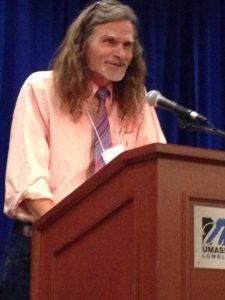
Douglas R. Anderson Doug Anderson retired in 2019 as Chair of the Department of Philosophy and Religion at the University of North Texas. Previously Dr. Anderson has held professorships at Southern Illinois University Carbondale and The Pennsylvania State University. He is author of several books, including Philosophy Americana (2006), and numerous articles. He is a prolific songwriter and performer of Americana music. His Ph.D. was taken at Pennsylvania State University at some point in the distant past, when he studied with Carl Hausman, Carl Vaught, and other luminaries of a by-gone and better age. He has a dog, a spouse, and very few people in his life, which is how he likes it. His Hahn Lecture is here. He lives in southern Illinois, teaches the occasional class at SIU, and is a Senior Fellow at AIPCT.
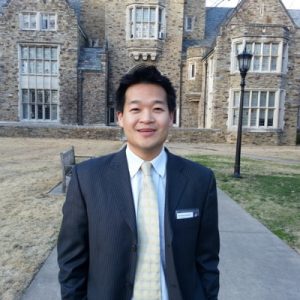
John B. Min is a Philosophy Professor at College of Southern Nevada. His work lies in social and political philosophy, especially power and democratic theory. He is the co-author of Power in Deliberative Democracy: Norms, Forums, and Systems (Palgrave 2018) and has published extensively on the epistemic dimensions of deliberation. His current research project explores Ralph Waldo Emerson’s conception of power and its implications for contemporary democratic theory. He is a Resident Fellow at AIPCT for January 2026.
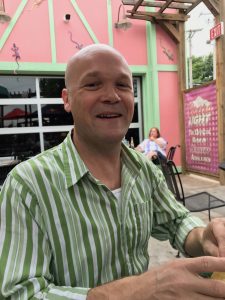
Brian J. Stanfield is Assistant Professor of Philosophy at John A. Logan College, Carterville, Illinois. His research interests include the history of American thought, especially Emerson and the Transcendentalists, and process philosophy, especially Whitehead. His MA is in American Studies from Northwest Missouri State University, with a thesis on The Folk Process, as conceived and explained by Pete Seeger and other practitioners of folk music. Brian is currently working on the idea of genius in the philosophy of Emerson.