



Lewis Hahn Lecture 2026: George R. Lucas, Jr.
The AIPCT in cooperation with the Foundation for the Philosophy of Creativity is pleased to announce the 2026 Lewis Hahn Memorial Lecture. Read about the series here.
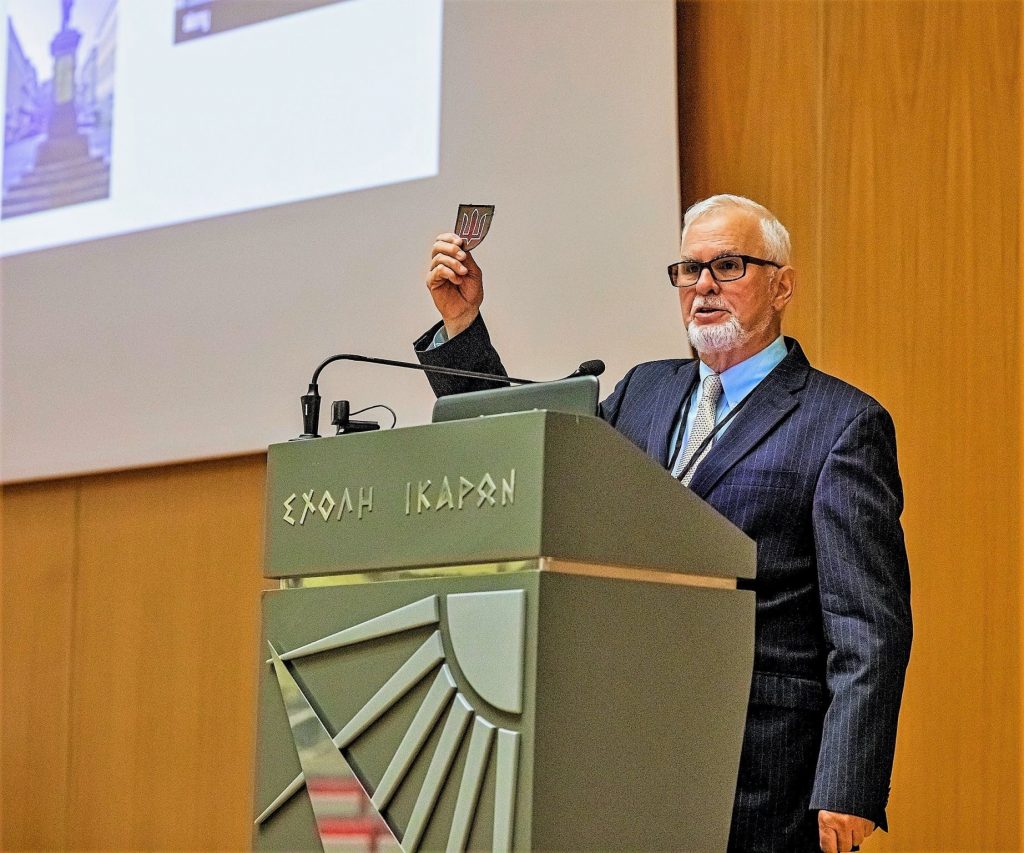
This year’s honoree is George R. Lucas, Jr. The event will take place June 30, 2026 at AIPCT beginning at 3:00. There will be snacks and drinks provided, although attendees are welcome to bring their own contributions to food and drink. At 6:00 there will be pizza for everyone present. The event is free and open to the public.
The Schedule
3:00 Jose-Miguel Rosillo-Cevallos, “A Defense of Martial Integrity as a Virtuous Weapon”
4:30 Gary L. Herstein, “Reclaiming the Horizon: George Lucas on the Scope of Speculative Philosophy.”
7:00 George R. Lucas, Jr., “In Quest of Actuality.”
The Talks
Jose-Miguel Rosillo-Cevallos, A Defense of Martial Integrity as a Virtuous Weapon.”
This lecture aims to explain the significance of the intellectual corpus of George R Lucas Jr in the field of military ethics, in order to motivate a proposal for meeting the current global geopolitical and technological moment in light of my independent concept of ethical risk, defined as the possibility of loss of stakeholder trust, as deployable by military institutions and individuals alike.
Gary L. Herstein, “Reclaiming the Horizon: George Lucas on the Scope of Speculative Philosophy.”
The horizon in the title that is to be reclaimed is that which is limned by systematic philosophy. The chosen term here is that which was emphasized by Dr. Lucas himself, rather than Whitehead’s preferred phrase of “speculative philosophy”. It is not just out of courtesy, as this presentation is inspired by, and in honor of, Dr. Lucas. Rather, the focus here is very much on just those systematic facets of doing philosophy “in the large” (my phrase), above and beyond the obviously speculative – and, needless to say, fallibilistic! – aspects inherent to all bold thought experiments. The excess of confidence, even unto recklessness displayed by those who have preceded us should not so instill in us such a paralyzing fear of error that we turn away from daring much.
The first part of this essay will be a review of some salient parts of Dr. Lucas’ The Rehabilitation of Whitehead (1989, ‘RW’ hereafter). It is not the intention here to give a book report, but it is important to establish the care and the scope with which Lucas centers his discussion in the history thought. Ideas are not comets that appear out of nowhere in the “sky of mind”. Of course, we now know that comets themselves don’t appear out of nowhere. But that is a fact of history and inquiry, and we need to be willing to take up that history. Such an apology is likely unnecessary in an audience such as this, but there remain important gaps even today, even after the Anglo-American academic community has begun to grudgingly admit that a few important things were written prior to last week’s journal publication.
The next step will be to turn our focus in greater detail to two thinkers in particular: Hegel and Whitehead. Here we will cast our net somewhat wider in terms of the texts we examine, both of Dr. Lucas’ and primary sources. These two particular thinkers are chosen specifically because they land squarely within Dr Lucas’ own narrative, and also because this author has sufficient familiarity with each to address their ideas with at least a small degree of understanding. But there is a third reason, possibly the most important: their similarities (often overlooked) only serve to set their differences (often exaggerated) in sharp relief.
This will lead to the third major strand in this essay: to honor Dr. Lucas, it is not sufficient to merely speak about his work, but to follow the inspiration of that work where we find it leading our own thoughts. Unmoored from any need to be faithful to any text not my own, I will pursue some few of my own thoughts as these have been stirred up and then set loose. Obviously this last will be no one’s fault but my own.
George R. Lucas, Jr. “In Quest of Actuality”
From its earliest origins, philosophy has preoccupied itself substantially (if not exclusively) with an inquiry into what is actual, or what we might characterize as the “quest for Actuality.” What is it that makes a specific thing what it is? In particular, what are the most fundamental or elementary thing or things from which all other things are composed, while themselves composed of nothing more fundamental or elementary than themselves? Is proto ousia ultimately one thing or kind of thing (Parmenides–monism, the One), or many things (pluralism, the Many) and are those ultimate things the same (Leucippius, Democritus) or different (Anaxagoras, Empedocles) in which case, how can they collectively be characterized as “elementary?” Is proto ousia itself/themselves even a “thing” or entity at all, or is it/they a flux or process (Anaximender, Heraclitus)?
Aristotle labeled the goal of this quest ousia (Being; etymologically in Latin, “substance”) or more specifically proto ousia: that which is fundamental, coming into being, and which can never be predicated of anything else, nor exist in anything else. For Aristotle, primary being (which is certainly not “inert” substance) is hylomorphic: arising when form (eidos, or importantly different from Plato, morphos) is imposed upon matter or substance (hyle) through some sort of purposeful or intentional agency (entelechia). It is this purposeful imposition of form in matter that gives rise to Actuality.
Descartes search for the res verae (translating Greek to Latin) is similarly the search for what is truly actual – in this instance, the fundamental things whose very existence cannot be doubted. Unlike Aristotle, however, the fundamental actuality is not a concrete, existing object, but the cogito, a thinking thing (res cogitans). Taking sides somewhat more with Aristotle than Descartes, Hegel then argued that the most fundamental actuality is both agency or entelechia, and entity—neither an abstract universal (eidos) or an inert particular substance, but an Einzelnheit — an individual, the “concrete Universal,” thought and substance intertwined.
In my own work, I relied heavily on Hegel’s synthesis in the Science of Logic (1812) to unravel Whitehead’s complex and demanding doctrine of “actual entities.” For both, the fundamental concept of analysis was organism, something that was at different phases of its existence both subject and object. Setting aside Whitehead’s painstaking development of preliminary variations of this doctrine (as displayed in his earliest student lectures at Harvard, 1924-28), the finished account in Process and Reality (1929) is of forms or patterns which characterize the structure of “actual occasions” or discrete “drops of experience” (a phrase borrowed from William James, in Principles of Psychology), whose coming to be (like Hegel’s concrete universal) is dialectical: involving a creative tension between inheritance from the past (efficient causality) and present subjectivity or creativity (Descartes’ res vera or final cause; Aristotle’s entelechia). The fully completed concretum (George L. Kline’s term) is itself the end result of the process of concrescence, each of which are “occasions” not entities, not “inert substances” but “processes.” Thus, as Whitehead remarks, every actual occasion begins with an objective causal inheritance from its unique past, upon which the creative forms of subjectivity are interposed, resulting in a new objective datum, a novel bequest from past and present for subsequent creative actualization in the future.
Whitehead claims that Creativity is the Category of the Ultimate, the characterization of all actuality as a creative advance. Unlike Whitehead’s most ardent disciples, however, I see this account itself not as unique sui generis, but instead as a novel synthesis (as well as an extensive revision) of the many earlier attempts in the history of Western philosophy to comprehend the nature of Actuality as Becoming rather than Being per se. Whitehead’s unique contribution is a description of what might be called the “quantum of explanation:” the “actual entity” is not, as Whiteheadians mostly believe, some sort of “ontological rival” to the particles of quantum physics, but instead offer a blueprint for the togetherness of the necessary components or features that any actual occasion or epochal “drop” of actual experience must embody if truly “actual.” The actual entity “is not a bit of physical existence. It is a conceptual tool that helps arrest temporal passage and the flux of the physical universe” (Auxier & Herstein). The actual entity is thus not an atom, subatomic particle, or even a Leibnizian monad in this sense of the smallest unit of being. Instead, each of these entities (and every other sort of actuality) exhibits, in turn, the explanatory characteristics of discrete “actual entities.” Whitehead was searching for a way to give a coherent account of a universe composed of multifarious events of otherwise diverse and constantly changing pattern, and so a basic unit or quantum of explanation is required that applies to such diversity universally, in order finally to satisfy the quest for the actual.
The Presenters
In the first area he initially focused on A.N. Whitehead, G.W.F. Hegel, R.G. Collingwood, and the development of process metaphysics. His dissertation at Northwestern University in 1978, Two Views of Freedom in Process Thought, was selected by the American Academy of Religion for publication in the initial AAR Dissertation Series (#28) in 1979. His subsequent work, supported by a bibliographical fellowship from the American Theological Library Association, was published as The Genesis of Modern Process Thought (Scarecrow Press, 1983) and selected as an outstanding academic book by Choice magazine. He was perhaps best known in this area for a subsequent book, The Rehabilitation of Whitehead (State University of New York Press, 1990) and most recently, The Ordering of Time: Meditations on the History of Philosophy (Edinburgh University Press, 2020), subsequently awarded the J.N. Findlay Prize by the Metaphysical Society of America in 2024. From 2010 to 2024, Lucas served as the General Editor of the Collected Edition of A.N. Whitehead, also published by Edinburgh U.P. He was elected President of the Metaphysical Society of America in 2016, and awarded the MSA’s “Paul Weiss Founder’s Medal” in 2022.
Lucas’s second area of work is ethics and applied ethics. His historical focus is on Kant and deontological ethics. The applied focus is principally on the fields of military ethics, the ethics of war and peace, and ethics and emerging military technologies. He is a member and past president of the International Society for Military Ethics. His works include Military Ethics: What Everyone Needs to Know (Oxford U.P., 2016), Ethics and Cyberwarfare (Oxford U.P., 2017), Ethics and Military Strategy in the 21st Century: Moving Beyond Clausewitz (Routledge, 2019), and Law, Ethics, and Emerging Military Technologies: Confronting Disruptive Innovation (Routledge, 2023). He is co-editor (with CAPN W.R. Rubel, USN) of Ethics and the Military Profession and a companion volume, Case Studies is Military Ethics (Pearson, 2003-2015) among the most widely used textbooks in this field in the world.
Lucas was a tenured professor at the Santa Clara University, Clemson University, the U.S. Naval Academy, and the Naval Postgraduate School. He retired in 2014, after which he served over the subsequent decade as a visiting professor at Notre Dame University, Case-Western University, the French Military Academy (St.-Cyr), and finally as the Stockdale Professor of Ethics at the U.S. Naval War College (Newport, RI). He is currently an adjunct visiting professor at the Southern Illinois University (Carbondale IL), where he is A.N. Whitehead Professor of Philosophy and Director, the Center for Process Studies Archives.
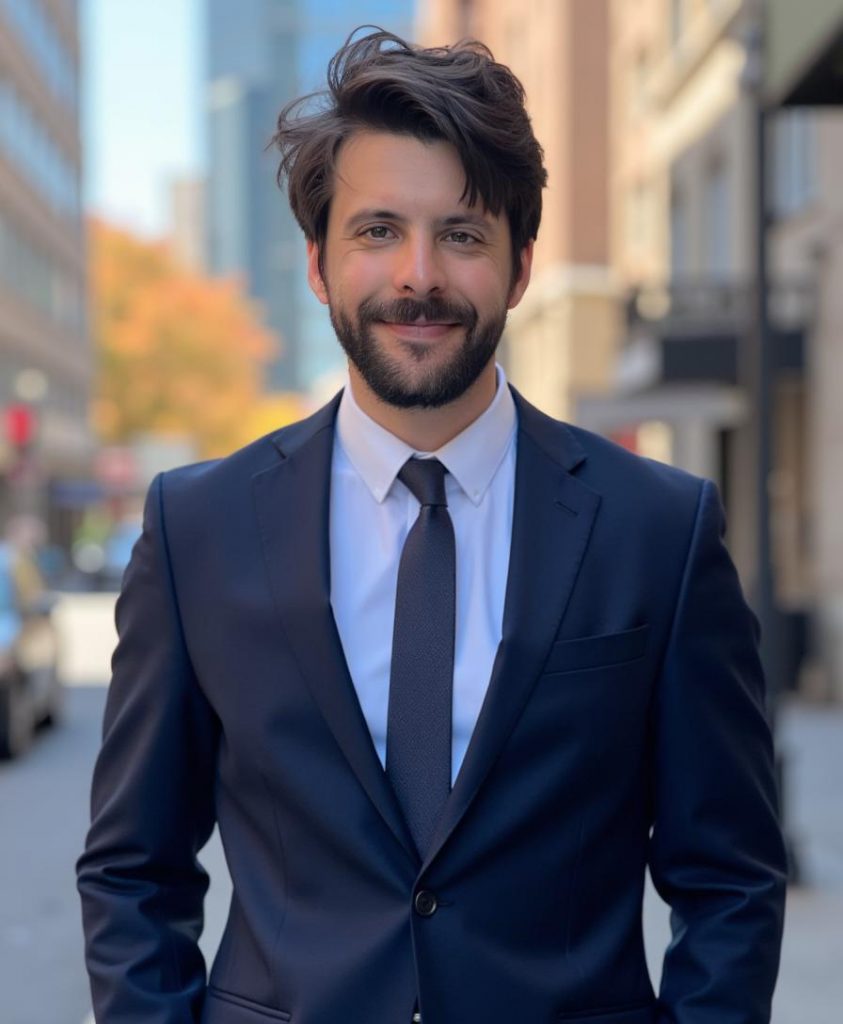
He is currently enrolled in law school at UNAM, as his grandfather once was. He has advised Grupo Financiero Banorte, the Mexico City Supreme Court, and the Navy of Mexico, which are offered as token examples of his primary specialties as a Corporate & Judicial & Military Ethicist, respectively. His goal is to establish ethics as a strategic priority in the global political and economic landscape.